Aggregators
Who’s Overcharging New Yorkers?

Hi, it’s Wassim Berro from Burger Index
This month we explored a key driver of customer churn in New York’s food and grocery delivery space: affordability gaps between aggregators.
💸 Q: Are customers paying different prices for the same products across apps?
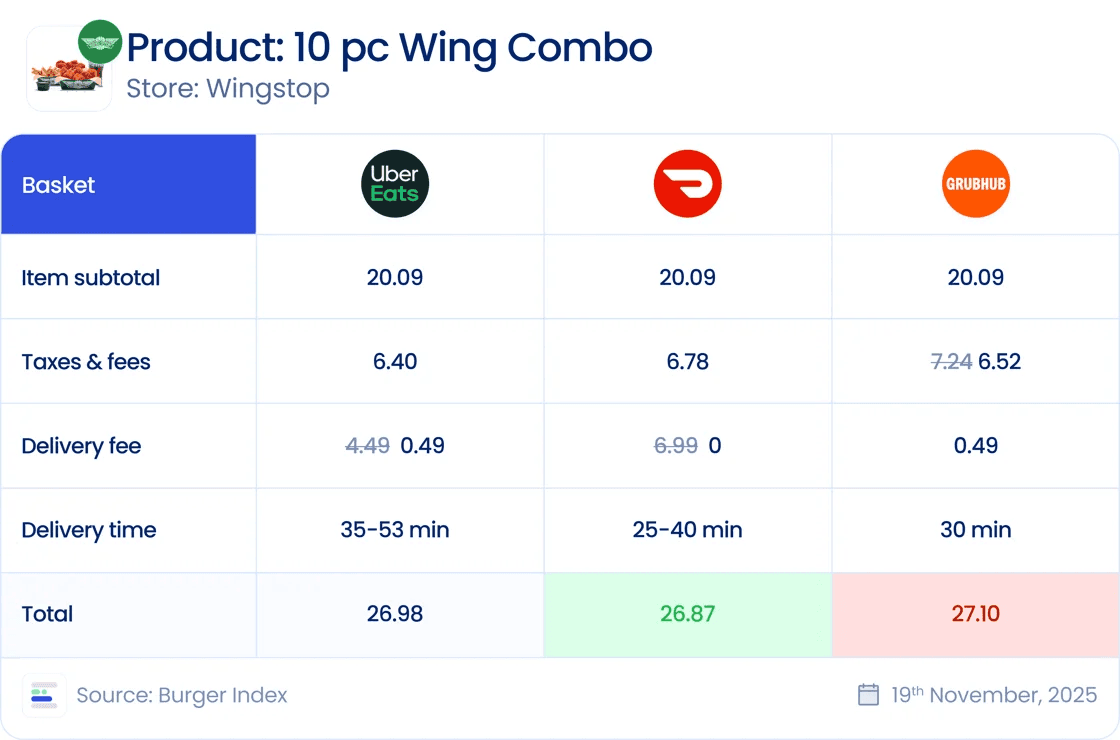
Yes, but the differences are very minor. For the same 10 pc Wing Combo order from Wingstop:
Uber Eats: $26.98
DoorDash: $26.87
Grubhub: $27.10
That’s less than a 1% difference across platforms indicating a tightly competitive landscape.
🛒 Q: How do grocery baskets compare?
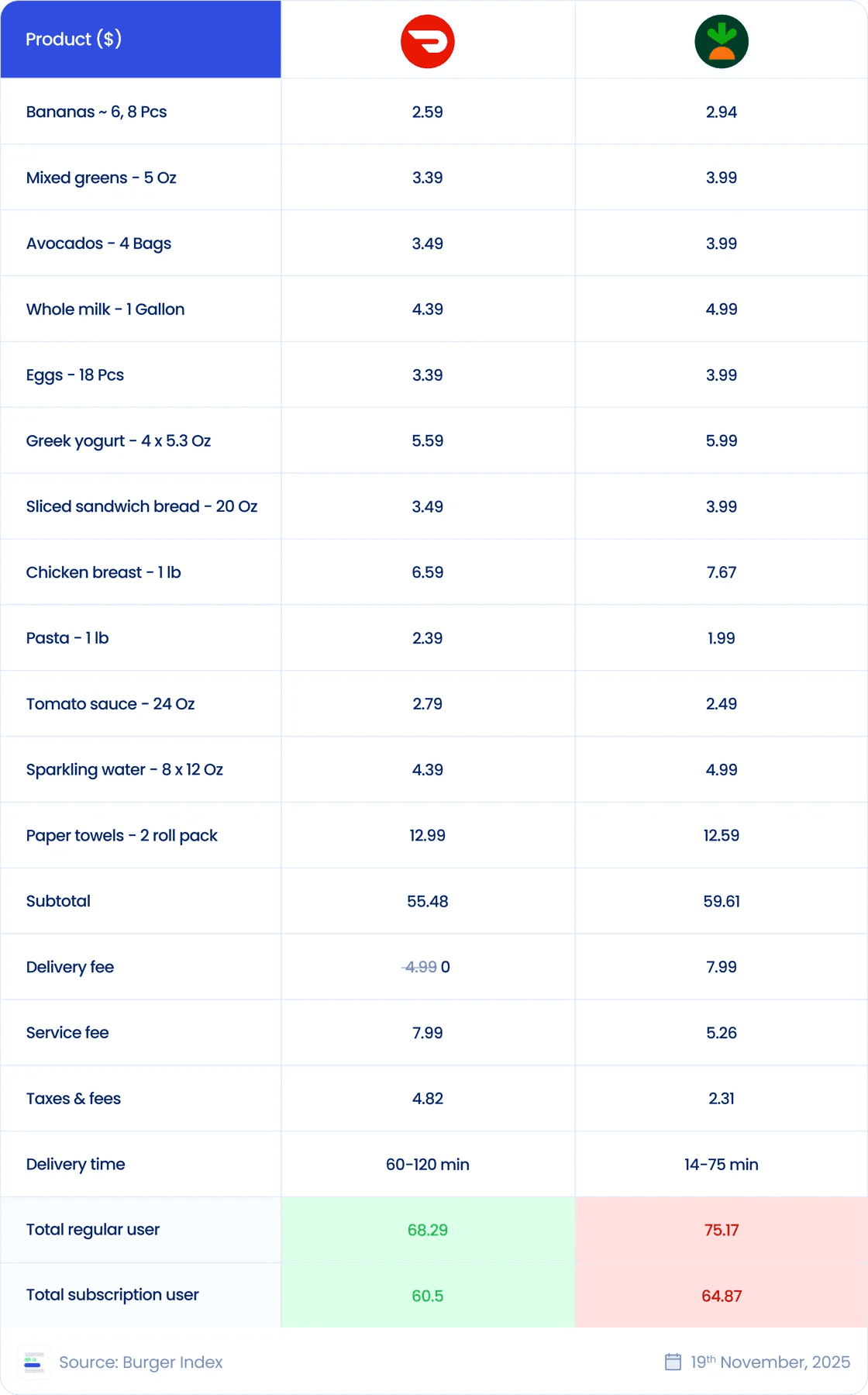
We tracked a 12-item grocery basket: bananas, milk, eggs, yogurt, chicken, etc. across platforms for regular and subscription users:
For regular users:
DoorDash: $68.29
Instacart: $75.17
For subscription users:
DoorDash: $60.5
Instacart: $64.87
DoorDash was consistently cheaper, with a $6.88 lower cost for regular users and $4.37 for subscribers. That said, delivery fees, service charges, and times vary sharply and delivery times reach up to 120 minutes.
📉 Q: Why does this matter for aggregators?
Because price and delivery time drives switching behaviour.
Burger Index helps aggregators to:
Identify product-level price markups across stores
Extract service and delivery fees
Flag boroughs or verticals where you're at risk of losing on affordability
🔍 Want to compare your affordability position in Manhattan, Brooklyn, or Queens?
Book a demo here to get instant visibility into how your prices stack up.
You might also like
Learn actionable strategies, proven workflows, and tips from experts to help your product thrive.