Who’s Overcharging New Yorkers?

Hi, it's Wassim Berro from Burger Index
This month we explored a key driver of customer churn in New York's food and grocery delivery space: affordability gaps between aggregators.
Are customers paying different prices for the same products across apps?
Yes, but the differences are very minor. For the same 10 pc Wing Combo order from Wingstop:
- Uber Eats: $26.98
- DoorDash: $26.87
- Grubhub: $27.10
That's less than a 1% difference across platforms, indicating a tightly competitive landscape.
How do grocery baskets compare?
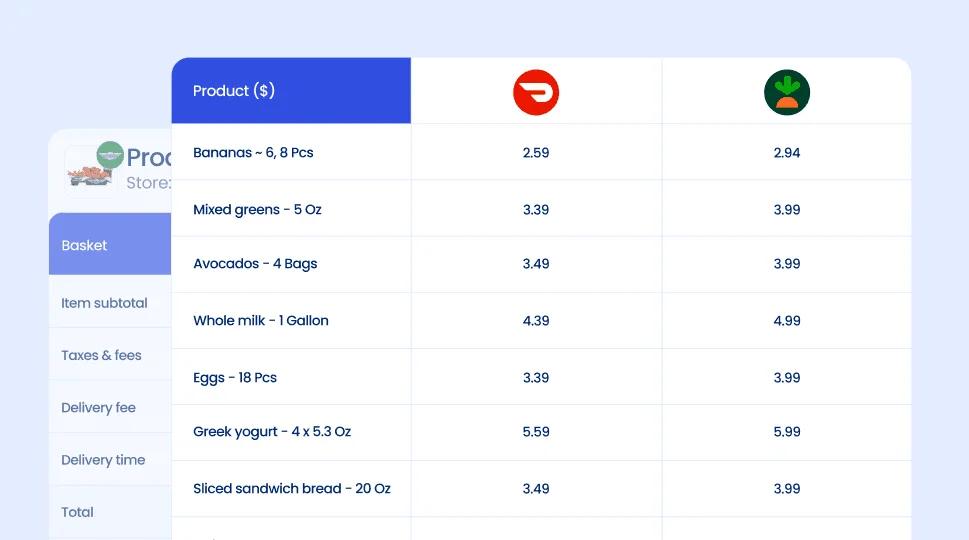
We tracked a 12-item grocery basket (bananas, milk, eggs, yogurt, chicken, etc.) across platforms for regular and subscription users:
- Regular users: DoorDash $68.29 vs Instacart $75.17
- Subscription users: DoorDash $60.50 vs Instacart $64.87
DoorDash was consistently cheaper, with a $6.88 lower cost for regular users and $4.37 for subscribers. That said, delivery fees, service charges and times vary sharply, and delivery times reach up to 120 minutes.
Why does this matter for aggregators?
Because price and delivery time drive switching behaviour. Burger Index helps aggregators to:
- Identify product-level price markups across stores
- Extract service and delivery fees
- Flag boroughs or verticals where you're at risk of losing on affordability