Aggregators
Just Eat vs Uber Eats: Which Restaurants Are You Missing?
Hi, it's Wassim from Burger Index
On this week's BI Insights, we looked at a question every marketplace growth team asks:
Which restaurants are available on a competitor, but missing from my platform?
For delivery platforms, expanding supply isn't just about signing more restaurants. It's about identifying the highest-value restaurants that customers can already order from elsewhere.
Today, this process is still largely manual. Commercial teams search competitor apps, compare listings and build prospect lists by hand, with little visibility into which restaurants are most valuable to acquire first.
Let's see what happens when we compare Just Eat and Uber Eats in London.
Supply overlap: most restaurants are shared
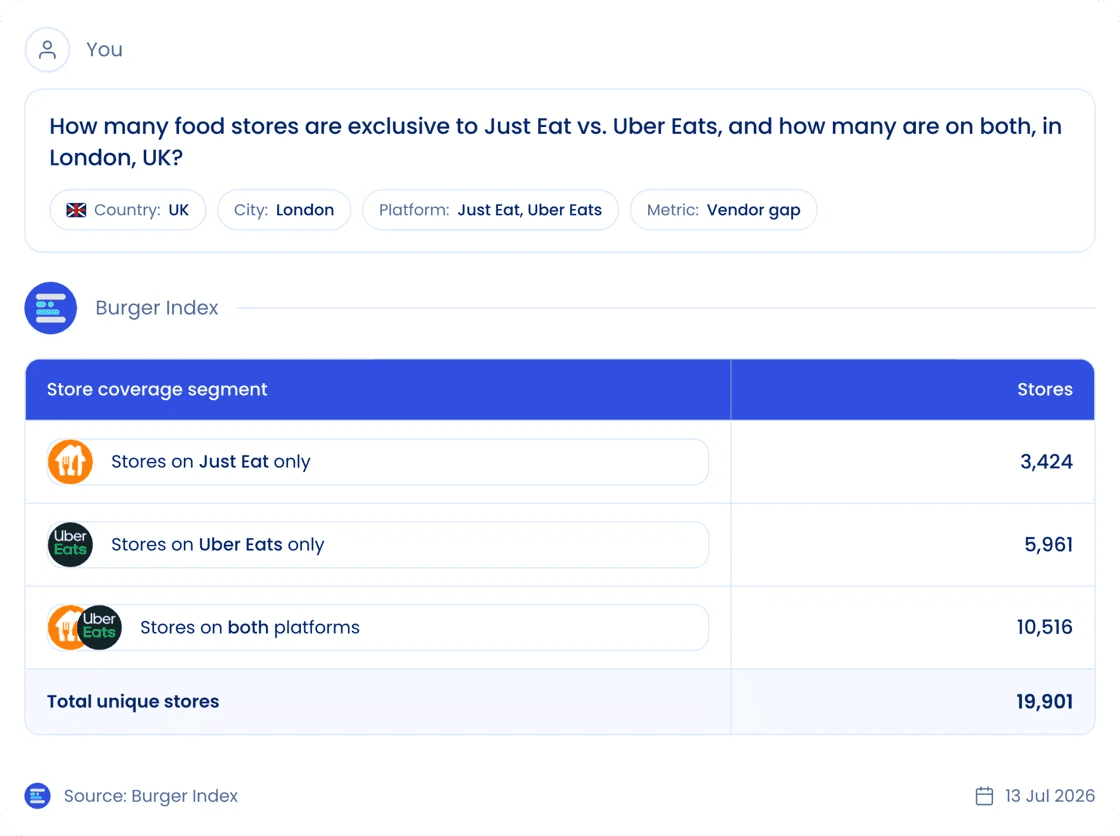
The majority of restaurants are available on both platforms. While overlap is significant, nearly half of the market still represents exclusive supply.
Finding the highest-value gaps
Not every missing restaurant is worth pursuing.
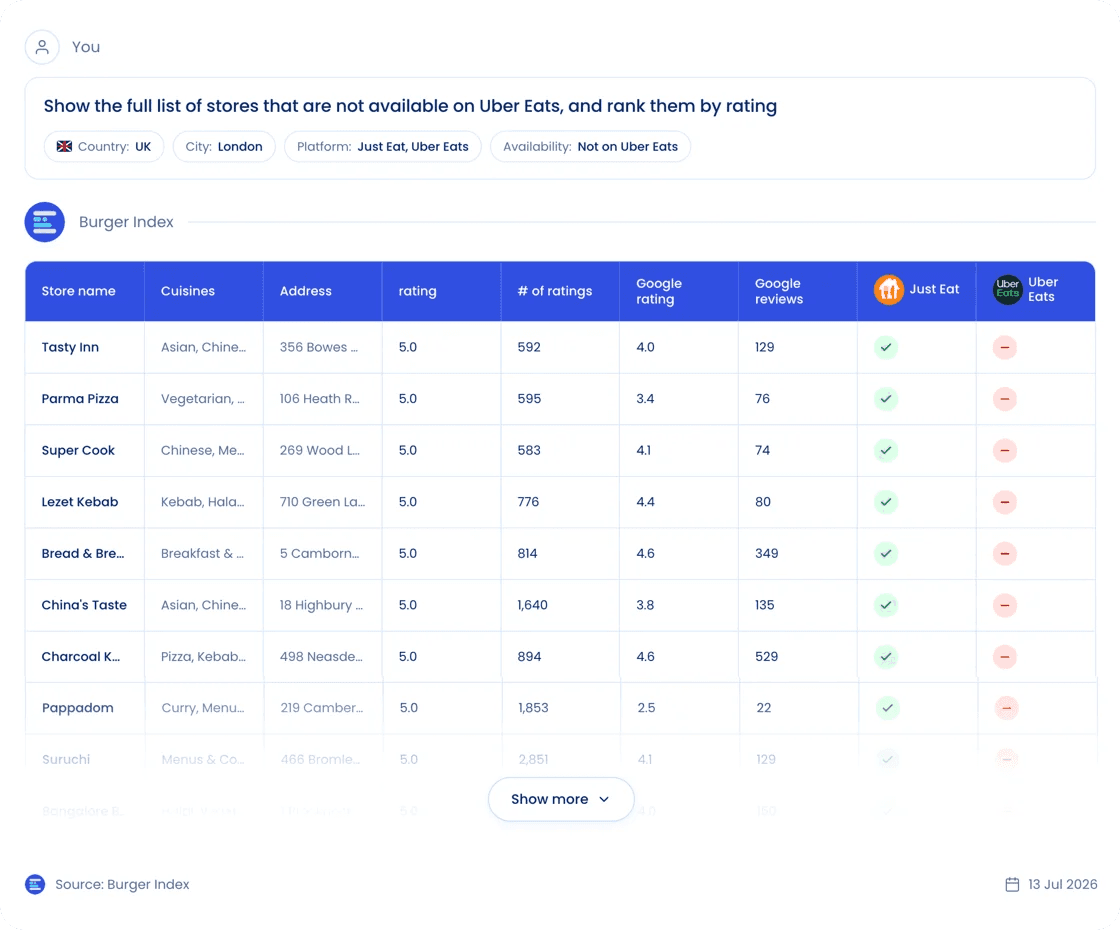
Instead of generating a simple list of missing vendors, teams can rank opportunities using signals most likely to drive customer demand such as:
Customer rating
Number of ratings
Google rating
Google reviews
Cuisine
Location
Turn vendor gaps into acquisition pipelines
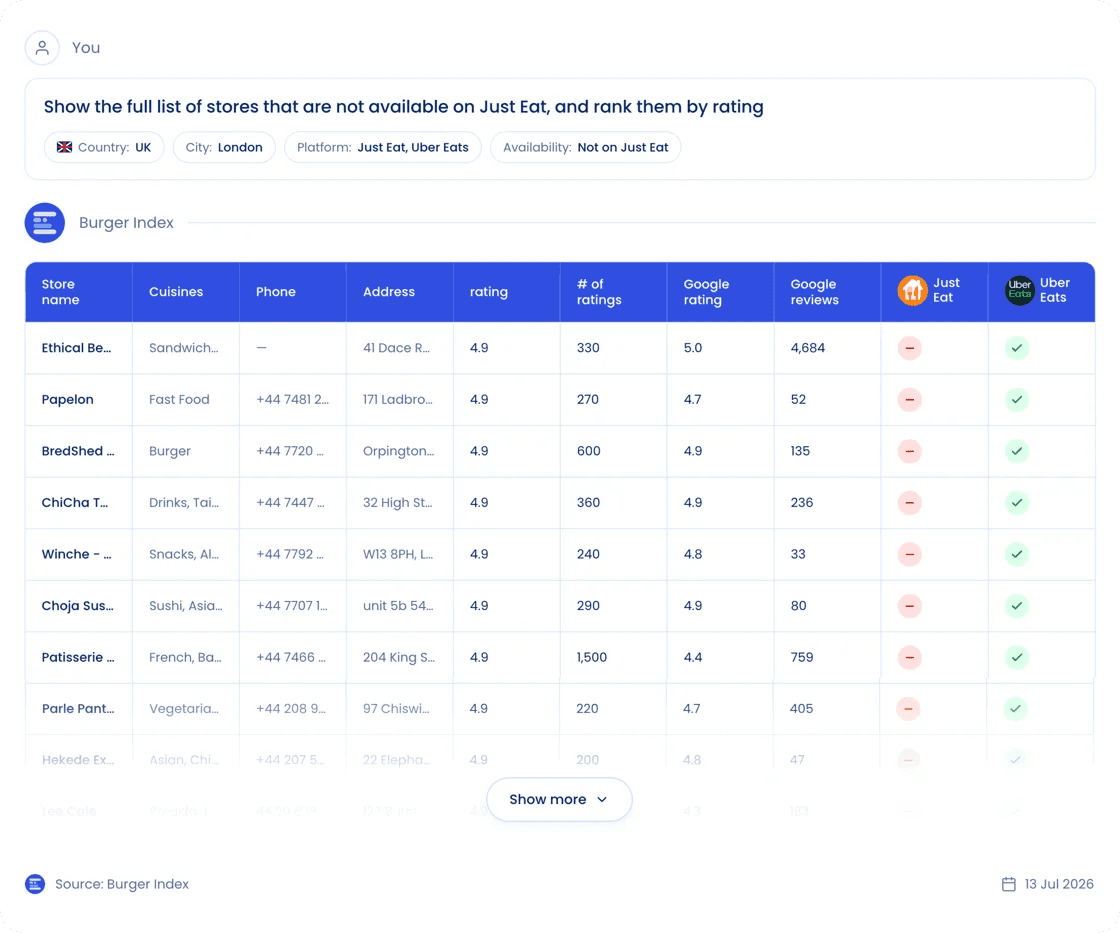
Vendor gap analysis becomes a live sales pipeline. Commercial teams can instantly generate lists of restaurants that are:
On Just Eat but not Uber Eats
On Uber Eats but not Just Eat
Each opportunity includes restaurant details and quality indicators, helping acquisition teams move directly from market analysis to outreach.
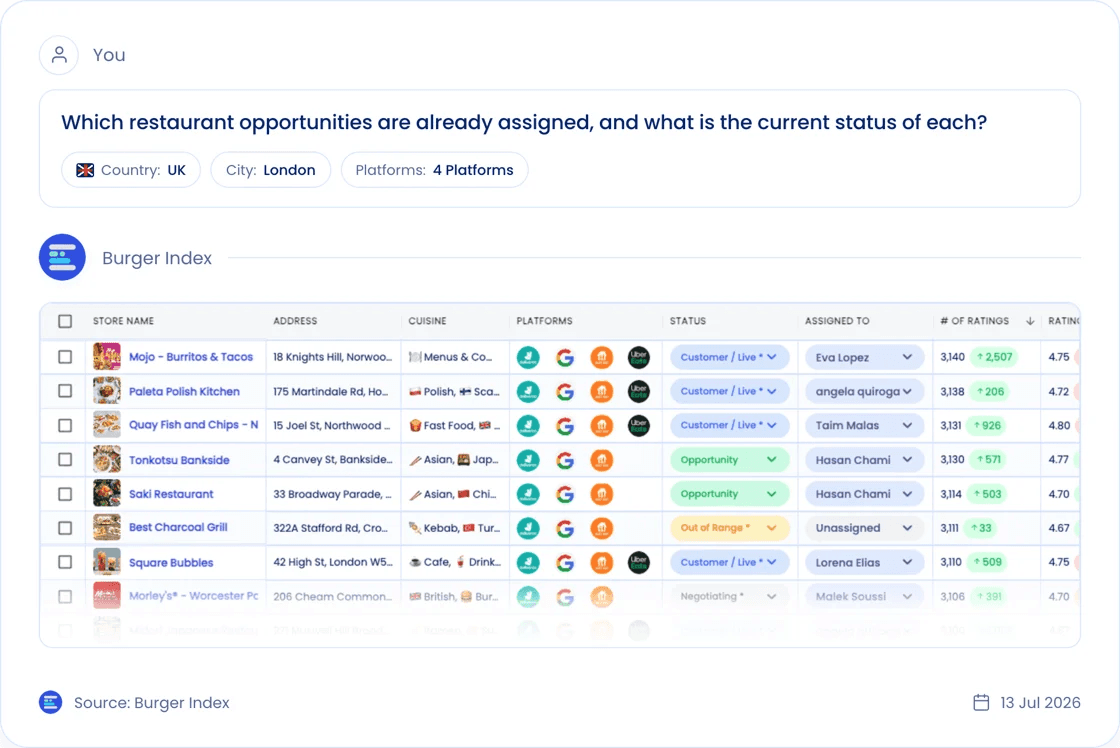
Tag store status and assing team members
Once priority vendor gaps have been identified, aggregators can manage each restaurant directly within the platform.
Teams can classify restaurants as Customer, Sales Opportunity, Out of Range, Not Interested, or apply any custom status based on their acquisition workflow. Each account can also be assigned to the relevant sales or account management team member, creating a clear and structured pipeline from identification to outreach.
Restaurant profiles include available contact information, such as phone numbers, allowing commercial teams to quickly reach qualified prospects and focus their efforts on the highest-value opportunities.
What this means
Winning supply isn't about contacting every restaurant.
It's about identifying the right restaurants, prioritising them based on commercial potential, and monitoring how vendor gaps change over time.
Burger Index continuously extracts restaurant data across delivery platforms, matches stores across marketplaces and identifies exclusive vendors in every city.
Teams can search for vendor gaps, rank acquisition opportunities and receive alerts as competitive supply changes.
Want to see how this could be applied to your market?
👉 Book a demo at www.burgerindex.com
You might also like
Learn actionable strategies, proven workflows, and tips from experts to help your product thrive.


